October is National Mental Health Awareness Month in the U.S., a time to reflect on how we can protect and nurture emotional well-being at every stage of life. For older adults, mental health challenges have been especially acute in the wake of COVID-19. Studies show that nearly 4 in 10 seniors experienced depression or anxiety during the pandemic, driven by isolation, fear of reinfection, and disrupted daily routines.
Holistic, mind–body practices such as Yoga, Tai Chi, and Qigong offer a way forward. Each discipline has unique strengths, and when combined, they create a complementary path to restoring resilience, balance, and peace of mind.
Why Mind–Body Practices Matter
The review article by Annals of Neurosciences highlights that Yoga, Tai Chi, and Qigong help regulate stress, support immune balance, and improve cognitive health. Unlike purely clinical treatments, these practices empower individuals to participate actively in their own healing.
- Calm the stress response → reduce anxiety and depression.
- Enhance cognition and memory → ease “brain fog” common after illness.
- Improve sleep and reduce fatigue → restore energy and mood.
- Strengthen social connection → buffer against loneliness.
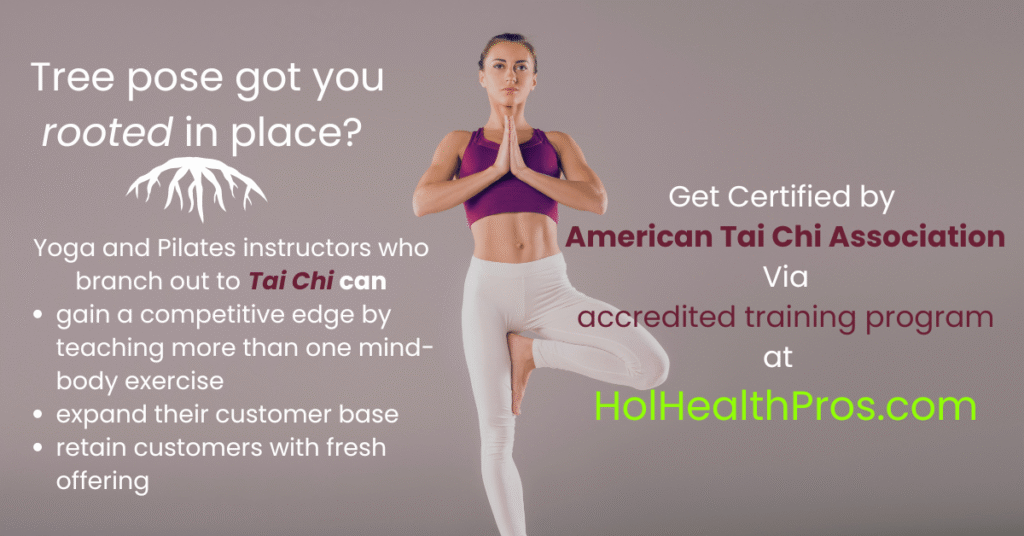
Yoga: Cultivating Inner Calm
Yoga emphasizes the connection between breath, body, and awareness. Research shows it can:
- Reduce anxiety and stress through meditation and breath regulation.
- Improve sleep quality, which directly impacts mood and mental clarity.
- Enhance cognition, supporting memory and focus in older adults.
- Boost resilience—even short-term breathing interventions improved capacity and reduced stress markers in COVID-19 patients.
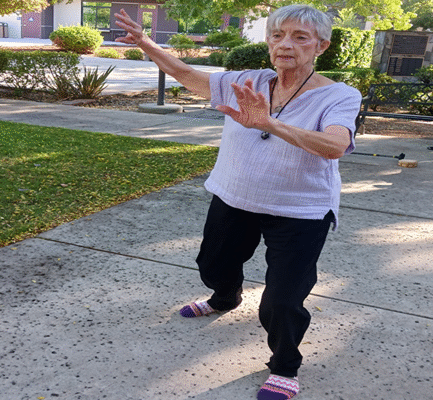
Tai Chi and Qigong: Flowing Toward Balance
Tai Chi and Qigong emphasize continuous, mindful movement coordinated with breath. These practices are especially effective for:
- Reducing perceived stress and depression, especially in older adults recovering from COVID-19.
- Enhancing cognition and motor learning, supporting brain health.
- Improving social connection—group or even virtual sessions reduce loneliness.
- Promoting restorative sleep and emotional regulation.
Where Yoga often begins in stillness, Tai Chi and Qigong carry that calmness into flowing motion.
Complementary Strengths: Why Use Both?
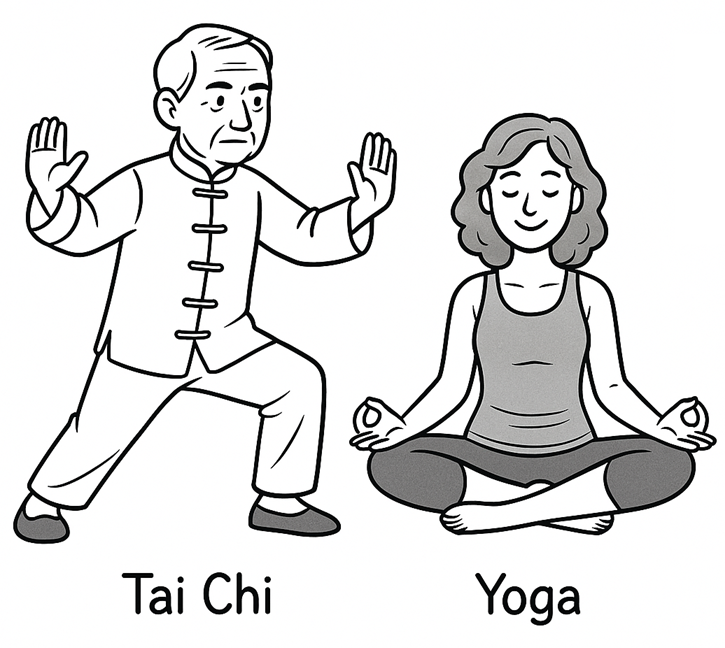
Yoga and Tai Chi/Qigong share a common philosophy: mind, body, and spirit are interconnected. Yet, their different emphases make them complementary:
- Yoga: Builds inner awareness through stillness, breath, and postures.
- Tai Chi/Qigong: Cultivate dynamic balance through graceful, flowing movement.
Practiced together, they provide a 360° approach to mental health: stillness + flow, inner calm + outer balance, self-regulation + social connection.
A Blended Daily Routine (30 Minutes)
- Yoga Breathing & Centering (5–7 min)
- Sit comfortably. Practice slow abdominal breathing (inhale 4 counts, exhale 6).
- Add a short meditation, focusing on gratitude or calming imagery.
- Gentle Yoga Postures (5–8 min)
- Cat-Cow or seated spinal twists.
- Forward fold (standing or seated).
- Tai Chi/Qigong Flow (10–12 min)
- Try “Parting the Wild Horse’s Mane” (Tai Chi) or “Lifting the Sky” (Qigong).
- Keep movements slow and continuous with deep breathing.
- Closing Stillness (3–5 min)
- Sit quietly, scanning the body with awareness.
- End with a short meditation for grounding.
This routine moves from stillness → to flow → back to stillness, blending the best of both traditions.
For Yoga Teachers: A New Dimension to Your Teaching
If you’re a yoga teacher looking to expand your offerings, Tai Chi is a powerful complement to what you already teach. That’s why you should try our online Tai Chi training program — beginner-friendly, evidence-based, and fully aligned with the healing principles you already believe in.
🌀 Read our general article here to learn why teaching Tai Chi can be a great option for yoga teachers.
👉 Join our Tai Chi training and expand your impact:
A Path Toward Resilience
The World Health Organization’s Decade of Healthy Ageing reminds us that well-being is more than physical survival—it’s about independence, connection, and emotional vitality.
Yoga, Tai Chi, and Qigong are not just exercises. They are time-tested tools for resilience, offering safe, enjoyable ways to cultivate peace of mind and healthy aging.
This October, during National Mental Health Awareness Month, consider weaving these complementary practices into your daily life. In doing so, you’re not only calming the mind—you’re nurturing a deeper resilience that carries into every part of living.