Most of us have heard that exercise can help reduce anxiety. But if you had to choose one type of exercise to focus on, what would it be?
Would a brisk walk work best? Strength training? Yoga? Qigong? Tai Chi?
A new study that Frontiers in Psychiatry reported in June tackled exactly that question. The researchers compared six different types of exercise to see which produced the greatest reduction in anxiety symptoms among older adults.
They also investigated another practical question: How much exercise is enough?
The answers are encouraging.
A Head-to-Head Comparison
The researchers combined the results of 23 randomized controlled trials involving 2,093 adults aged 60 and older. Using a network meta-analysis, they compared:
- Tai Chi
- Yoga
- Qigong
- Aerobic exercise
- Resistance training
- Mixed exercise programs
The researchers compared multiple exercise types with one another and ranked their effectiveness.
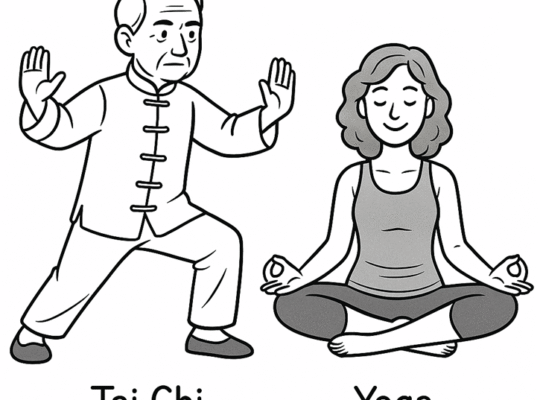
Tai Chi Came Out on Top
Nearly every exercise category reduced anxiety compared with doing little or no structured exercise.
The overall ranking was:
- Tai Chi
- Resistance training
- Yoga
- Qigong
- Aerobic exercise
- Mixed exercise (no statistically significant benefit)
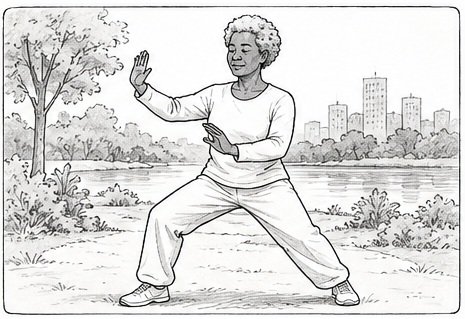
Tai Chi consistently ranked as the most effective exercise for reducing anxiety among the older adults included in this analysis.
That doesn’t mean the other activities aren’t worthwhile. Yoga, qigong, aerobic exercise, and resistance training all showed meaningful benefits.
The study suggests that the type of exercise may influence how much emotional benefit people receive.
How Much Practice Is Enough?
The study didn’t stop at comparing exercise types. It also examined the ideal amount of weekly practice.
To measure exercise “dose,” the researchers used MET-minutes per week. A MET (Metabolic Equivalent of Task) is simply a way scientists estimate how much energy an activity uses compared with sitting quietly. It combines the activity’s intensity, session length, and weekly frequency into one measurement.
The important finding is that more exercise was not always better.
Across all exercise types, anxiety improved as weekly exercise increased—but only to a point. After that, additional exercise produced smaller and smaller benefits.
For Tai Chi, the “sweet spot” was about 500 MET-minutes per week, which the researchers estimate is roughly equivalent to 40 minutes per session, three times a week.
That’s welcome news for anyone who worries they don’t have time to practice every day.
How Yoga Helps Reduce Anxiety
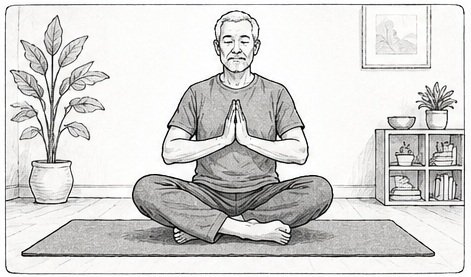
Yoga ranked among the top-performing exercises in the review. Compared with people who did not participate in a structured exercise program, those practicing yoga experienced significantly greater reductions in anxiety symptoms.
The researchers attribute yoga’s effects to its combination of controlled breathing, physical postures, and meditation.
The dose-response analysis suggests that yoga is effective with a moderate weekly amount of practice, with the strongest benefits occurring around 400–500 MET-minutes per week. In other words, regular practice appears to matter more than pushing yourself through occasional long sessions.
How Qigong Helps Reduce Anxiety
Qigong also significantly reduced anxiety compared with the control groups. While it ranked below Tai Chi, resistance training, and yoga, it still demonstrated meaningful improvements and performed similarly to aerobic exercise.
Qigong Is a traditional Chinese mind-body exercise similar to Tai Chi. Both emphasize slow, deliberate movements coordinated with mindful attention and natural breathing. Qigong integrates movement, breathing, and mental focus into a single practice, making it accessible to many older adults.
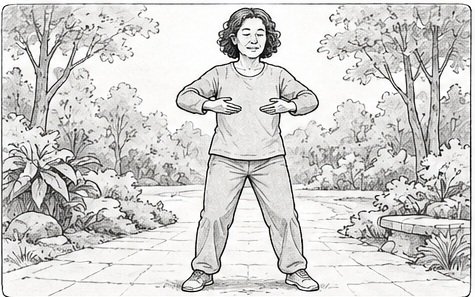
The study suggests that qigong may require a somewhat higher weekly practice volume than Tai Chi before significant benefits become apparent. Regular practice of Qigong at an adequate weekly volume is associated with meaningful reductions in anxiety.
Why Do Mind-Body Exercises Perform So Well?
One interesting pattern from the results is that 3 of the higher-ranking activities—Tai Chi, yoga, and qigong—are all mind-body exercises.
They combine:
- slow, controlled movement
- focused attention
- natural breathing
- relaxed body awareness
- mindful concentration
The researchers suggest that these elements may help regulate the body’s stress response while improving physical function and emotional well-being at the same time.
For older adults, these practices also have another advantage: they are gentle enough that many people can continue them for years. Long-term consistency may be one reason they produce lasting psychological benefits.
The Bottom Line
This study reinforces something many Tai Chi, yoga, and qigong practitioners have experienced firsthand: gentle, mindful movement can be a powerful way to support emotional well-being.
Among the six exercise categories compared, Tai Chi showed the strongest evidence for reducing anxiety in older adults, while yoga and qigong also demonstrated clear benefits.
Perhaps just as encouraging, the research suggests that you don’t need long or exhausting workouts. A moderate, consistent practice may be enough to make a meaningful difference.