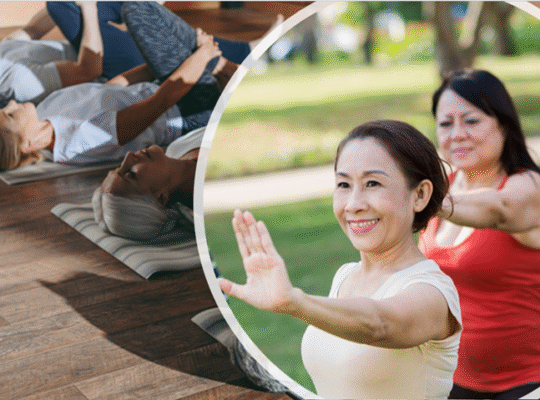
A Reflection on International Day of Yoga
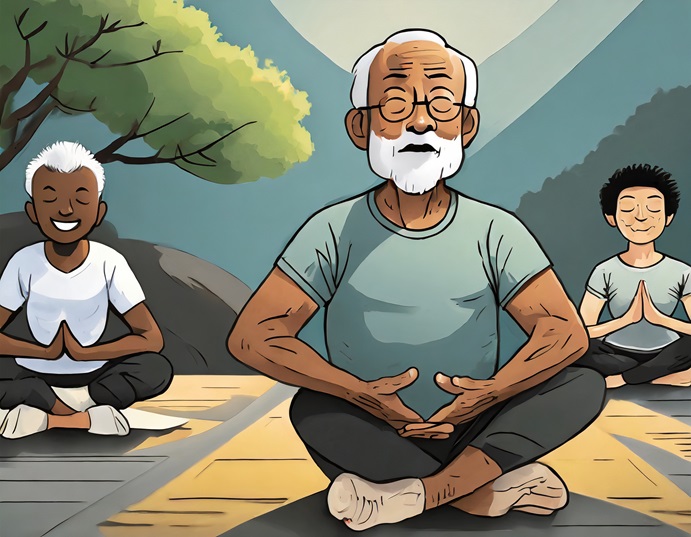
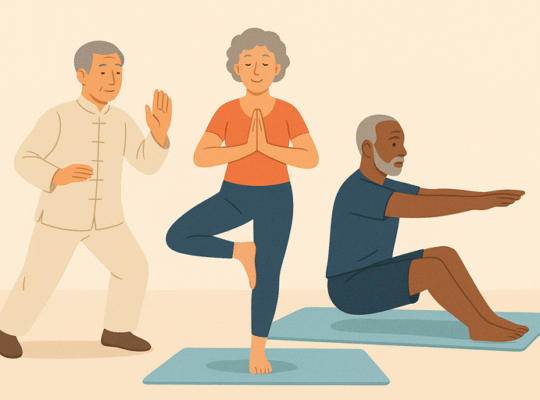
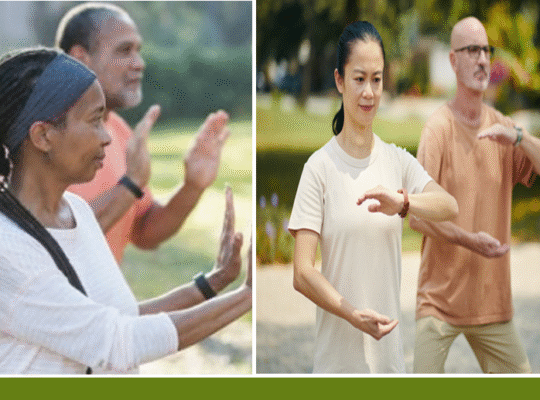
As the world celebrates the International Day of Yoga on June 21, this year’s theme, “Healthy Aging,” has us reflecting on a growing trend we have been noticing in recent years: yoga and Tai Chi are increasingly appearing side by side in community programs and healthcare settings.
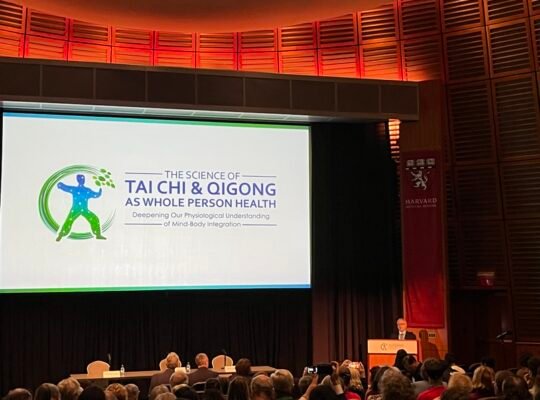
We see it in our own work as well, with more and more yoga teachers joining the Tai Chi training program at Holistic Health Pros.
Science may help explain this convergence, and a few recent studies on healthy aging provide compelling examples.
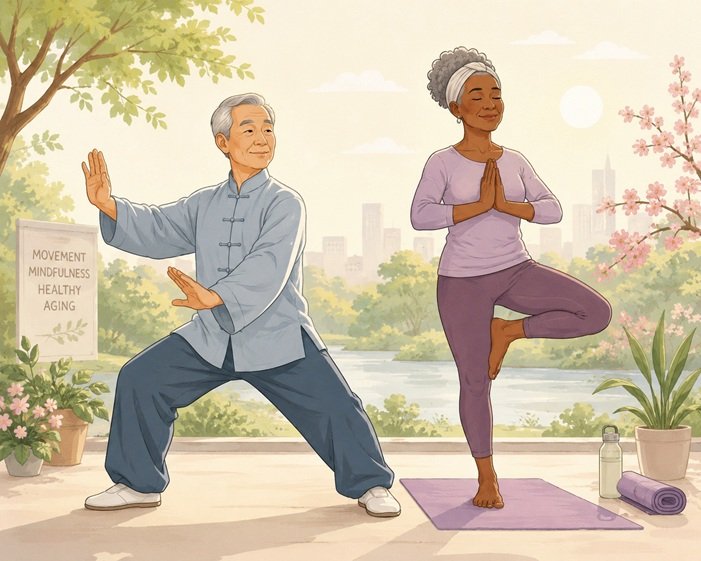
One of these studies used brain imaging1 and found that adults aged 55 to 65 who regularly practiced low-impact balance exercises such as yoga or Tai Chi showed structural differences in brain regions involved in movement, sensory integration, and cognitive processing compared with non-practitioners. These findings suggest that Tai Chi and yoga may help counter certain aspects of age-related brain decline.
Another recent study2 reached a similar conclusion from a different direction. After analyzing randomized controlled trials involving adults aged 50 and older, researchers found that mind-body exercises—including yoga, Tai Chi, and Qigong—significantly improved executive functions, the higher-order cognitive abilities that allow us to plan, focus attention, switch between tasks, solve problems, and regulate our behavior.
Why does this matter?
Because healthy aging is not simply about living longer. It is about preserving our ability to function independently and adapt to life’s challenges. Executive functions are essential for everyday activities—from remembering appointments and managing medications to navigating new situations and making sound decisions.
Interestingly, the researchers also identified practical intervention parameters associated with cognitive benefits:
- sessions of up to an hour,
- practiced three to four times per week
- over approximately twelve weeks.
Although yoga and Tai Chi emerged from different cultural traditions, both practices integrate movement, attention, and mindful awareness in ways that challenge not only our muscles and joints but also the brain systems that support coordination, adaptation, and cognitive function.
On this International Day of Yoga, this convergence offers an encouraging reminder: healthy aging may depend not only on staying physically active but also on continually engaging the mind through purposeful movement.
References:
1. The impact of balance exercise on brain age and brain morphometry: insights from MRI analysis. Aging clinical and experimental research, January 2026.
2. Chronic mind-body exercises for executive functions in middle-aged and older adults: a systematic review and meta-analysis of randomized controlled trials. Aging clinical and experimental research, March 2026.