How Tai Chi, Baduanjin, and Yoga Improve Balance at Different Stages of Frailty
When it comes to maintaining balance as we age, timing matters.
A September 2026 systematic review, appeared in the journal Frontiers in Aging, reveals that mind-body exercises such as Tai Chi, Baduanjin, and yoga can improve balance in older adults who are pre-frail or frail.
While those in the pre-frail stage tend to experience greater improvements, the findings offer an encouraging message: even after frailty develops, it is not too late to strengthen balance and improve physical function.
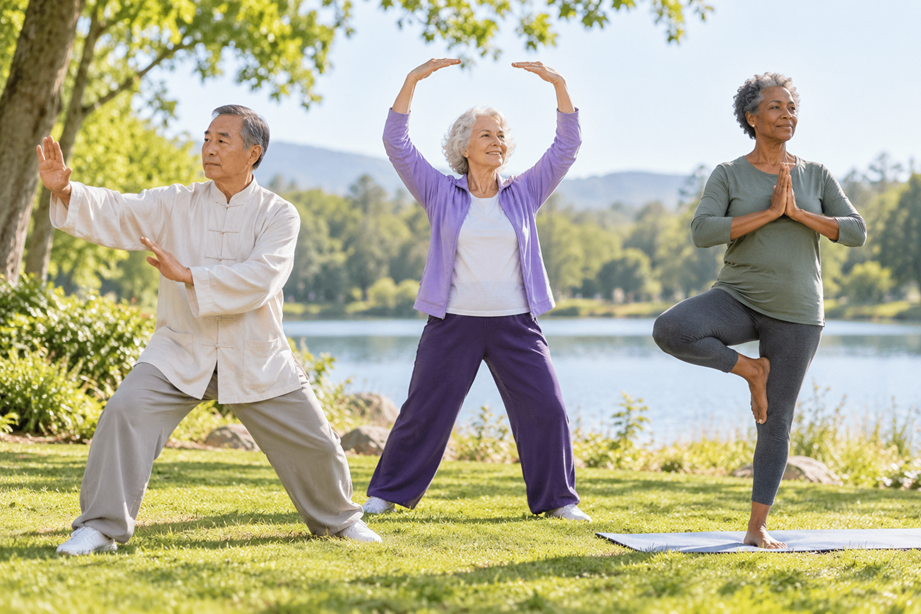
This article shares practical sights from the study about what to practice, how often, and when to begin.
Three Types of Balance—and Why Each Matters
The researchers analyzed 10 randomized controlled trials involving Tai Chi, Baduanjin, and yoga, with Tai Chi being the most frequently studied practice.
They examined three distinct dimensions of balance:
1. Static Balance: Staying Steady
The ability to maintain stability while standing still, such as balancing on one leg. The review found a statistically significant improvement in static balance.
2. Dynamic Balance: Staying Stable While Moving
Essential for walking, turning, reaching, and getting up from a chair. Mind-body exercise produced significant improvements in this category as well.
3. Overall Balance: Combining Multiple Abilities
Measured through comprehensive assessments of stability and functional movement. The results showed meaningful improvements across the combined exercises.
These distinctions matter for practitioners. A person who can stand steadily may still struggle with turning or walking around obstacles. Effective balance training should therefore challenge both stationary stability and controlled movement.
What Does This Mean for Tai Chi, Baduanjin, and Yoga?
Although the review included all three practices, it did not establish that one was superior to the others.
Nevertheless, their movement characteristics suggest different ways to target balance.
Tai Chi
Forms such as Wave Hands Like Clouds, Brush Knee and Push, and Golden Rooster Stands on One Leg offer opportunities to practice weight shifting, coordinated stepping, turning, and single-leg stability.
Baduanjin
Its eight movements incorporate controlled postures, coordinated arm and trunk movements, and gradual weight shifts. These may be especially accessible to beginners who prefer a shorter, structured routine.

Want to learn Baduanjin?
Enroll in or learn more about our online Baduanjin course today!
It is also included in our online training packages.
Yoga
Supported standing postures, controlled transitions, and gentle balance poses can develop postural awareness and stability.
These are practical applications of the movement principles, not evidence that the review proved particular forms or postures were most effective.
The Most Important Finding: Start Before Frailty Progresses
Perhaps the most striking discovery was that pre-frail older adults experienced substantially greater balance improvements than those already classified as frail.
Balance Improvement by Frailty Stage:
- Pre-frail: 1.62
- Frail: 0.45
Both groups benefited, but the pre-frail group showed a larger estimated improvement. These are standardized research measures, not percentage improvements.
This suggests that beginning Tai Chi or another mind-body practice while physical function is only beginning to decline may offer a valuable opportunity to preserve independence.
However, people who are already frail should not be discouraged. They also experienced measurable improvements, and appropriately adapted practice remains worthwhile.
How Much Practice Is Enough?
The researchers also examined exercise frequency, session length, and program duration.
Their findings suggest a practical starting framework:
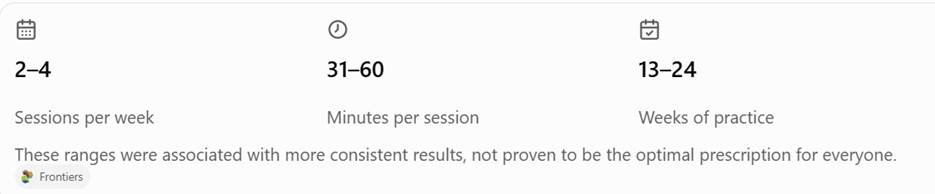
Interestingly, practicing five or more times weekly did not demonstrate a statistically reliable advantage over less frequent practice.
For Tai Chi students, the message is encouraging – consistency over several months may be more important than maximizing the number of sessions.
Putting the Research Findings into Practice
Whether practicing Tai Chi, Baduanjin, Qigong, or yoga, consider incorporating three elements into your routine:
- Controlled weight transfers: Practice shifting weight smoothly between your feet without leaning or rushing.
- Movement-based balance challenges: Include gentle stepping, turning, and changes of direction appropriate to your abilities.
- Supported single-leg stability: Gradually reduce reliance on hand support only when safe, using a stable chair or counter nearby.
Those with significant instability should begin under qualified supervision and adapt movements to their capabilities.
The Takeaway
This research reinforces an important principle of healthy aging: balance deserves attention before noticeable instability becomes a serious limitation.
It is also important to note that meaningful improvements remain possible even after frailty develops.
Starting early is advantageous, but continuing to practice safely is valuable at every stage.