Fear of falling (FoF) is one of the most common concerns facing older adults. Even without a previous fall, many begin to walk cautiously, limit activity, or avoid outings altogether. Over time, this fear can lead to muscle weakness, social withdrawal, and an increased actual risk of falling.
A comprehensive umbrella review recently published by Archives of Gerontology and Geriatrics—covering 25 systematic reviews and meta-analyses and including more than 12,000 older adults—provides a clear message:
mind–body exercises such as Tai Chi, Yoga, and Pilates are among the most effective ways to reduce fear of falling.
For holistic health professionals, this reinforces what movement therapists, Tai Chi instructors, and wellness practitioners know well: when older adults train balance, posture, breath, and awareness together, confidence grows and fear decreases.
Tai Chi: The Most Effective Approach for Reducing Fear
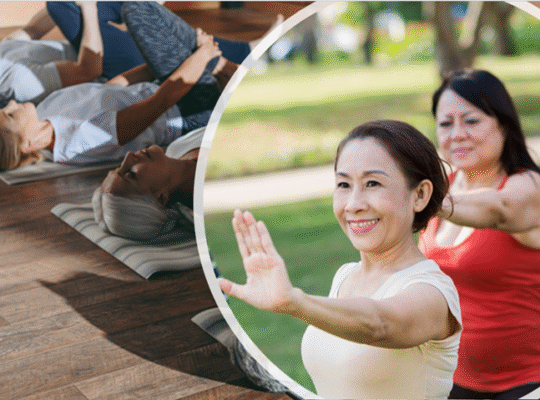
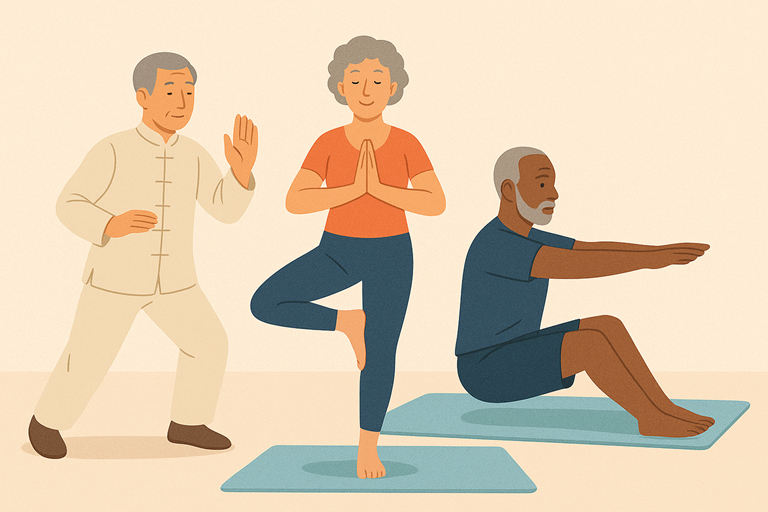
Among all interventions studied, Tai Chi stands out as the single most consistently effective method for reducing fear of falling. The umbrella review highlights that Yang-style Tai Chi, in particular, shows strong reductions in FoF in both healthy and frail older adults.
Why Tai Chi Works So Well
Tai Chi trains stability from the inside out by integrating:
- Slow, mindful weight shifting that improves dynamic balance
- Rooted stances and soft-knee postures that increase joint stability
- Whole-body coordination that strengthens deep leg and core muscles
- Proprioceptive awareness that helps users “feel” their center of gravity
- Relaxed breathing and mental calm that reduce anxiety-driven movements
Together, these qualities build confidence during everyday activities such as standing up, turning, and walking on uneven surfaces.
How Professionals Can Apply Tai Chi
- Start with short forms that emphasize weight shifts and posture.
- Use small group classes to create a supportive environment.
- Offer chair-supported variations for individuals with high fear or limited mobility.
- Reinforce slow transitions and relaxed breathing to reduce tension during movement.
Yoga: Functional Balance, Alignment, and Nervous System Regulation
Yoga is frequently grouped with Tai Chi in research as a “multidimensional” practice, meaning it integrates balance, strength, flexibility, and mindfulness. While fewer studies examine yoga alone, the umbrella review shows that holistic exercise programs—those combining these elements—consistently reduce fear of falling.
Why Yoga Helps Reduce Fear of Falling
Yoga supports older adults through:
- Standing balance postures (e.g., Tree, Warrior II), which improve stability
- Alignment-focused movement, improving posture and body mechanics
- Strengthening of key joints and muscles, especially in the lower body
- Breathwork, which calms the nervous system and reduces fear reactions
- Mindfulness, increasing control and awareness during daily movement
Yoga’s greatest impact is helping older adults regain trust in their bodies.
How Professionals Can Apply Yoga
- Use slow, controlled sequences suitable for older adults.
- Provide adaptive and chair-based variations.
- Emphasize breath-led transitions to reduce hesitation and fear.
- Incorporate grounding and balance cues to improve confidence.
Pilates: Building Core Control and Functional Stability
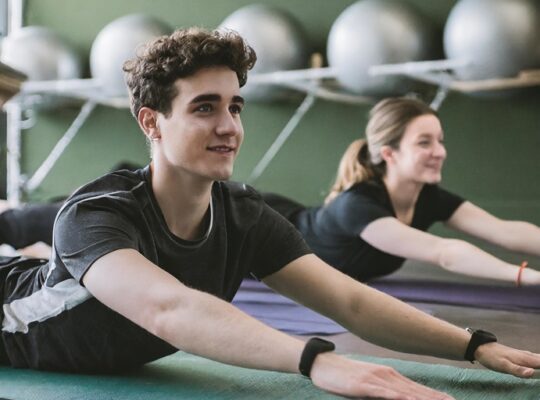
Pilates shows growing evidence for reducing fear of falling. Two randomized controlled trials in the umbrella review found that Pilates significantly improves balance, gait, and mobility—leading to meaningful reductions in FoF.
Why Pilates Helps Reduce FoF
Pilates strengthens the deep core and pelvic stabilizers, improving:
- Trunk control, essential for steady walking
- Hip strength, which supports recovery steps
- Postural alignment, reducing sway
- Gait quality, leading to more confident strides
- Movement precision, reducing fear-driven stiffness
Together, these benefits make movement feel smoother and more stable.
How Professionals Can Apply Pilates
- Begin with seated or supported exercises for core activation.
- Progress to standing work that integrates balance and stability.
- Incorporate resistance bands for hip and leg strengthening.
- Keep movements slow and intentional to build confidence.
Cognitive Behavioral Therapy as a Supportive Confidence-Building Tool
Cognitive Behavioral Therapy (CBT) consistently reduces fear of falling in older adults by helping them reframe anxious thoughts and gradually return to avoided activities. The umbrella review found that CBT improves FoF immediately after treatment and maintains benefits for up to a year.
While helpful, many older adults prefer movement-based programs over talk-based therapy.
Importantly, Tai Chi, Yoga, and Pilates naturally integrate CBT-like elements—awareness, pacing, self-efficacy, and gradual exposure—making them intuitive and enjoyable options.
How to Implement the Evidence in Practice
Based on the full body of evidence, the most effective strategies involve mind–body exercise, functional balance training, and confidence-building movement skills.
Most Effective Core Components
- Tai Chi (especially Yang-style)
- Yoga balance sequences and breathwork
- Pilates-based core and hip stability training
- Slow, mindful transitional movements
- Relaxation and grounding techniques
Recommended Additions
- Fall-risk education
- Home practice routines
- Group-based social support
Optional Complements
- CBT-influenced coaching
- Otago home exercises
- Technology-based balance games
Summary
Fear of falling is highly common—but very much changeable. The research overwhelmingly shows that mind–body practices, especially Tai Chi, offer the most effective path for reducing fear, improving balance, and restoring confidence.
Yoga and Pilates add meaningful support by strengthening the body, improving alignment, and calming the nervous system. When combined, these practices help older adults move with more ease, trust, and independence.