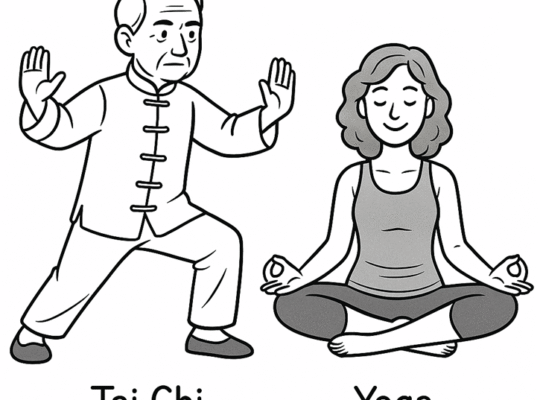
🧘♀️ Among all types of exercise, mind–body practices like Tai Chi and Yoga shine brightest for easing depression — especially when tailored to you.
Menopause is a major life transition — physical, emotional, and even spiritual. Hormone shifts, sleep problems, and changing roles can all stir up stress or sadness.
If you’ve felt low, anxious, or unmotivated during this stage, you’re far from alone.
A new 2025 study published in Frontiers in Psychiatry brings encouraging news: after analyzing 16 clinical trials of menopausal women worldwide, researchers found that regular exercise significantly reduced depressive symptoms — and that mind–body practices such as Tai Chi and Yoga produced the strongest improvements compared to aerobic and strength training.
| Yoga Teachers – Read this post about how, by adding Tai Chi, you can get into a stronger position in helping the women in menopause and growing your business at the same time. |
🧘♀️ Mind–Body Exercises Lead the Pack
While every form of movement helped, Tai Chi and Yoga stood out as the top performers.
Across multiple trials, mind–body practices produced the largest improvements in mood, outperforming aerobic workouts like walking or cycling and offering deeper emotional relief.

Why they work so well:
- They calm the stress response, slowing racing thoughts and steadying the breath.
- They balance brain chemistry, naturally increasing serotonin and dopamine.
- They improve sleep and focus, two things that often falter during menopause.
- They encourage self-compassion and mindfulness, creating a sense of peace and control.
The takeaway from the research is clear: movement that integrates body, breath, and awareness doesn’t just lift mood — it helps restore emotional balance during menopause.
🌼 Tailor the Practice to You
One of the study’s most interesting findings was that personalized exercise plans worked even better than group-based routines.
Women who followed individual programs — tailored to their abilities, comfort level, and pace — showed greater and more consistent improvements in mood.
Researchers suggested this may be because customized exercise better fits each woman’s needs and daily rhythm, helping them stay consistent and experience deeper benefits over time.
That insight reinforces a simple truth: the best exercise is the one that fits your life.
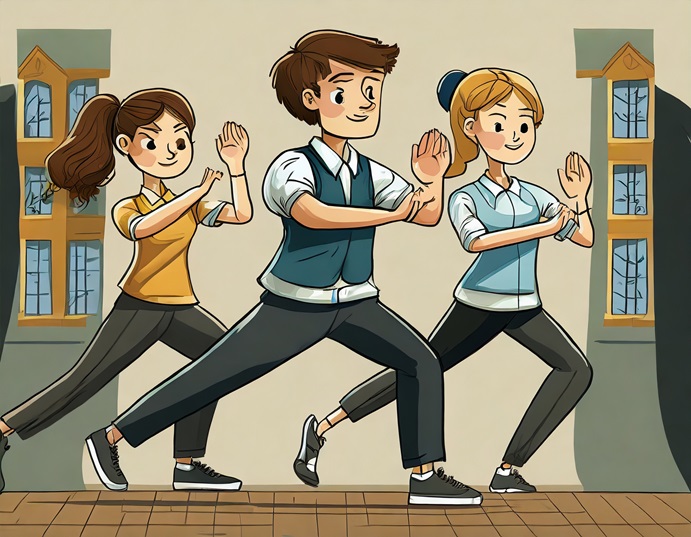
If you’d like to experience this kind of personalized support, you can try our free Tai Chi Companion, which creates a custom Tai Chi program based on your goals, energy level, and experience.
It’s a gentle way to start moving again at your own pace — and feel how much difference a personalized plan can make.
👉 Get your personalized plan here (free and takes just a minute)
💪 Exercise Is Natural Medicine for Mood — and Consistency Is the Key
Once you’ve found a practice that feels right, consistency is what unlocks the benefits.
Women who exercised regularly — whether walking, doing strength work, or practicing mind–body movement — showed much lower depression scores than those who stayed inactive.
The greatest improvements came from –
- sessions lasting 60–90 minutes,
- practiced two to five times per week and
- continued for at least three months.
Shorter sessions still helped, but lasting change came from staying consistent — and the improvements were large enough to rival some antidepressant treatments.
Scientists believe this happens because exercise does more than release endorphins. It also:
- Boosts brain-derived neurotrophic factor (BDNF), which supports healthy brain function.
- Regulates cortisol, your main stress hormone.
- Enhances sleep and restores daily rhythm.
- Improves self-confidence and emotional stability.
When you combine these effects with mindfulness and breath control — the heart of Tai Chi and Yoga — you create a natural antidepressant that heals body and mind together.
And when your plan is personalized to your needs, those benefits can become even more profound.
🌙 Start Early, Especially in Perimenopause
The study found that women in perimenopause — the years before their final period — saw the biggest mood improvements from exercise.
Hormonal changes can make emotions fluctuate more sharply, and movement helps smooth those waves.
Start now, even with 10 minutes a day, and you’ll be building balance and resilience before symptoms peak.
💖 The Takeaway
Menopause doesn’t have to mean losing your spark. Regular movement — especially Tai Chi and Yoga — can help you feel grounded, calm, and capable again.
As the researchers concluded:
“Exercise is an effective and promising non-pharmacological strategy for reducing depressive symptoms in menopausal women.”
So roll out your mat, find your breath, and let movement bring you back to balance — one mindful step at a time.
And if you’d like a little guidance, try our free Tai Chi Companion — because your journey deserves your rhythm.