September is Healthy Aging Month, a great time to check in with your body, mind, and daily habits. If you already practice something like yoga, Tai Chi, Qigong, or regular walking, you’re on a wonderful path. But did you know that trying another one of these gentle practices can help you feel even better—mentally, physically, and emotionally?
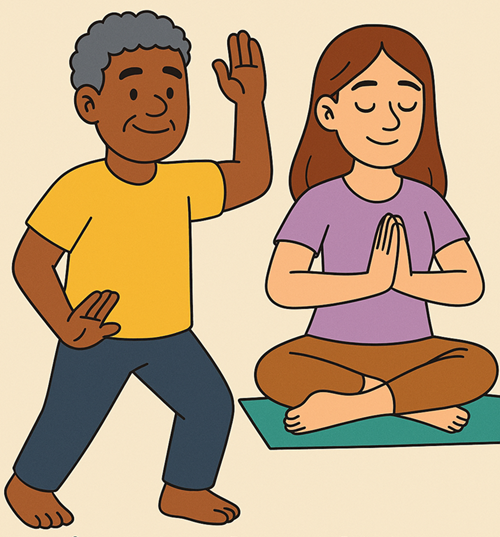
A recent research article in the Annals of Neurosciences reviewed what these practices can do for older adults—and the message is clear: when it comes to aging well, simple, mindful movement works wonders.
🌱 One Practice Is Good. Two Might Be Even Better.
Many older adults already practice yoga or Tai Chi and have felt the benefits—like better balance, less stress, deeper sleep, and improved focus.
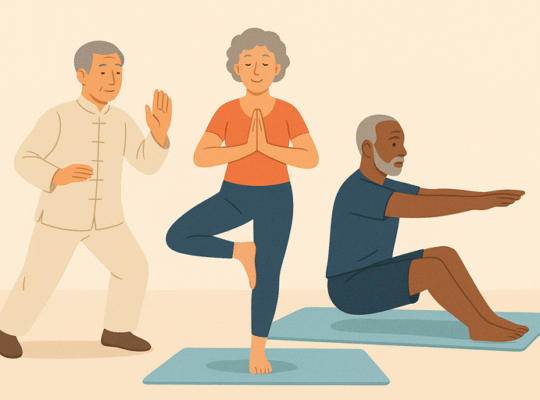
But different mind-body practices support your health in slightly different ways. For example:
- Yoga helps calm the nervous system, improve flexibility, and boost mood.
- Tai Chi improves balance, coordination, and memory.
- Qigong supports sleep, energy levels, and emotional stability.
- Gentle exercise like walking or stretching boosts circulation, lifts your mood, and keeps you mobile.
By adding something new to your routine—or even just learning about it—you can unlock more benefits for your body and your brain.
🧘♂️ 4 Practices That Support Healthy Aging (and How to Try a New One)
1. Yoga – A Calm Mind and a Stronger Body
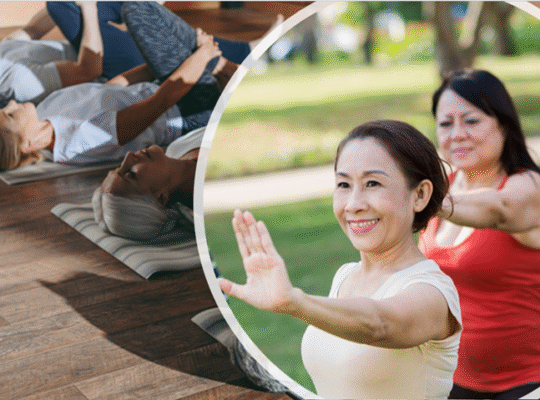
Yoga combines movement, breathing, and relaxation. It’s known for helping people feel more grounded, less anxious, and more in tune with their bodies. Older adults who practice yoga often report better sleep and less joint pain.
If you already do yoga…
Try Qigong or Tai Chi for a slower, breath-focused experience that builds on your body awareness.
New to yoga?
Search for “chair yoga for seniors” on YouTube or check with a local wellness center.
2. Tai Chi – Moving Meditation for Balance and Focus
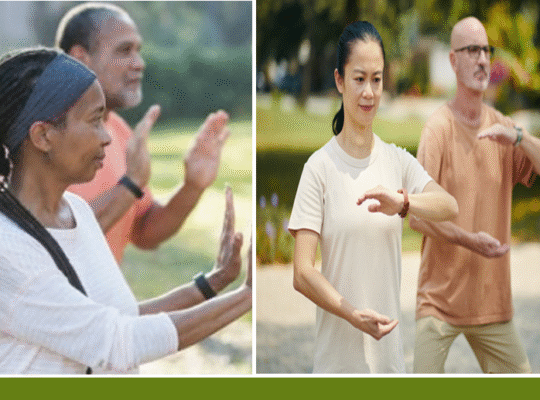
Tai Chi uses slow, graceful movements that help you stay steady on your feet and calm in your mind. Studies show it helps with memory, mood, and fall prevention.
If you already do Tai Chi…
You might enjoy yoga’s stretches or Qigong’s flowing breathwork.
New to Tai Chi?
Look for classes at senior centers or try a beginner video like “Tai Chi for Beginners—Day 1.”
3. Qigong – Gentle Energy for Rest and Resilience
Qigong is an ancient Chinese practice with soft, simple movements and deep breathing. It helps support emotional balance, better sleep, and even cognitive function.
If you already do Qigong…
Consider adding a weekly yoga session or light walking to boost strength and flexibility.
New to Qigong?
Start with short online routines like “Qigong for Seniors” or “8 Brocades (Ba Duan Jin).”
4. Exercise – Simple Movement, Big Impact
Don’t overlook everyday activity. Light walking, dancing, stretching, or even gardening counts. Moving your body regularly keeps your joints healthy and boosts your mood.
Try adding movement you enjoy. That could mean 10 minutes of dancing to music, a walk with a friend, or some gentle stretches before bed.
💬 What the Research Says
The article behind this blog post—written by yoga teachers, brain scientists, and public health experts—makes a strong case for these kinds of practices. Their key message?
👉 “Mind-body practices can support healthy aging, reduce stress and fear, and help older adults feel more connected and in control of their health.”
And it doesn’t have to be expensive, high-tech, or perfect. These practices are flexible, low-cost, and gentle enough to adapt to your needs.
💡 Ready to Try Something New?
Here are some easy next steps:
✅ Ask your current instructor or studio if they offer beginner sessions in other mind-body practices.
✅ Explore online classes—many are free and tailored for older adults.
✅ Invite a friend or family member to try something new with you.
✅ Most importantly—go at your own pace. A little each day is more powerful than you might think.