If you’ve ever had digestive issues that seemed tied to stress, tension, or physical inactivity, you’re not imagining it — the way you move affects the way you digest. And gentle practices like yoga and Tai Chi may be some of the most powerful tools available for supporting gut health.
A 2025 scientific review published in the World Journal of Gastroenterology confirms that both yoga and Tai Chi can improve digestion, reduce inflammation, and regulate the gut-brain connection — especially in people dealing with conditions like IBS, reflux, or constipation.
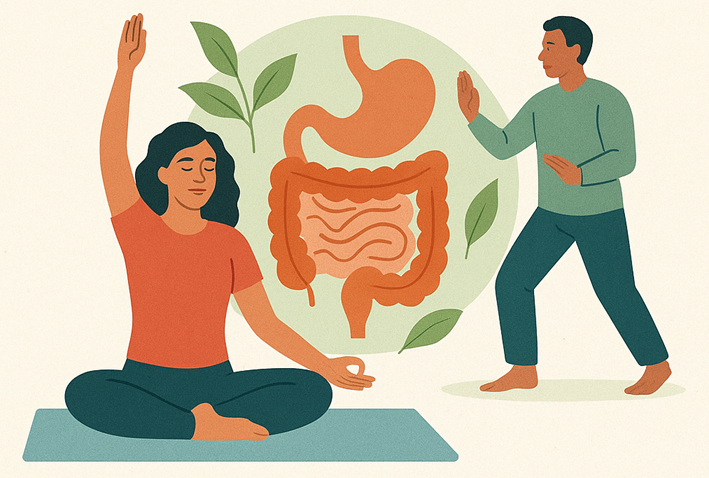
🌿 How Gentle Movement Supports Your Gut
Your digestive system isn’t just about food — it’s also deeply connected to your nervous system, immune function, and emotional state. Practices like yoga and Tai Chi support the gut by:
- 🌀 Improving gut motility: Twists, flowing steps, and abdominal breath work help food move smoothly through the system.
- 🔥 Reducing inflammation: Mindful movement downregulates the body’s stress response — a root cause of many digestive disorders.
- 🧠 Balancing the gut-brain axis: These practices calm the nervous system, easing symptoms like cramps, nausea, or bloating.
- 🌸 Supporting healthy gut bacteria: Regular moderate exercise can increase beneficial gut microbes and protect the gut lining.
Both yoga and Tai Chi have been shown to relieve symptoms of IBS, acid reflux, IBD, and chronic constipation — all without the risks associated with high-intensity exercise.
☯️ Yoga and Tai Chi: Different Tools, Shared Benefits
Yoga and Tai Chi approach movement differently, but they share a powerful common goal: restoring balance.
- Yoga offers postures, breath work, and meditation — often performed on the floor or mat.
- Tai Chi uses upright, flowing movements and emphasizes shifting weight, balance, and internal energy.
Both support digestion by combining movement with breath and mindful awareness — and both are accessible to people of all ages and fitness levels.
If you already practice one, consider adding the other. Many people find that Tai Chi complements yoga beautifully, especially for:
- Days when you’re low on energy
- Times of healing or digestive sensitivity
- Working with older adults or those who can’t get up/down from the floor easily
🧘♀️ Tips for a Gut-Friendly Practice
To get the most digestive support from your yoga or Tai Chi sessions:
- 🕒 Practice at least 1–2 hours after a meal to avoid cramping or reflux.
- 💧 Stay gently hydrated, but avoid drinking large amounts right before movement.
- 🫁 Focus on abdominal breathing to stimulate the “rest-and-digest” nervous system.
- 🙆 Favor gentle movements like supine twists, Tai Chi waist turns, or side stretches.
- 🛑 If you deal with reflux, avoid deep forward bends or strong abdominal compression after eating.
Consistency matters. A few minutes a day can make a lasting difference.
💡 For Yoga Teachers: A New Dimension to Your Teaching
If you’re a yoga teacher looking to expand your offerings, Tai Chi is a powerful complement to what you already teach. The same study that supports yoga’s benefits for digestion highlights Tai Chi as equally — and in some cases more — effective for gut-sensitive populations.
That’s why you should try our online Tai Chi training program — beginner-friendly, evidence-based, and fully aligned with the healing principles you already believe in.
It’s a great way to:
- Add gut-friendly movement options for students with stress or sensitivity
- Offer themed workshops or senior classes
- Refresh your own practice while gaining new tools to serve your community
🌀 Read our general article here to learn why teaching Tai Chi can be a great option for yoga teachers.
👉 Join our Tai Chi training and expand your impact: