Highlights:
- Veterans’ Chronic Symptoms: with or without Gulf War Illness (GWI)
- Why Tai Chi May Work Well for Veterans with Chronic Conditions
- A 12-Week Tai Chi Program: Physical Benefits for Veterans with GWI
- A Study about Tai Chi for Gulf War Veterans’ Mental Health
- Remote Tai Chi Program – a Gamechanger for Veterans
- Why Tai Chi Matters for Veterans with Chronic Conditions
- Practical Lessons for Tai Chi Practitioners
Veterans’ Chronic Symptoms: with or without Gulf War Illness (GWI)
Many veterans live with ongoing health challenges after their military service—chronic pain, fatigue, poor sleep, brain fog, and reduced physical stamina. These symptoms can make it harder to stay active, which often leads to a cycle of declining mobility and worsening health.
Research studying veterans with Gulf War Illness (GWI)—a chronic condition affecting many veterans of the 1991 Persian Gulf War—offers useful insights that may apply more broadly to veterans experiencing similar symptoms.
Gulf War Illness, affecting nearly one-third of the 700,000 service members who were deployed during that conflict, is typically marked by fatigue, musculoskeletal pain, memory and concentration problems, sleep difficulties, digestive issues, and mood changes. These symptoms can persist for decades and often interfere with physical activity.
Because of this, VA Boston Healthcare System has led research in using Tai Chi as a safe, practical way to help veterans who suffer GWI symptoms. A couple of papers from their research were published in recent months.
Why Tai Chi May Work Well for Veterans with Chronic Conditions
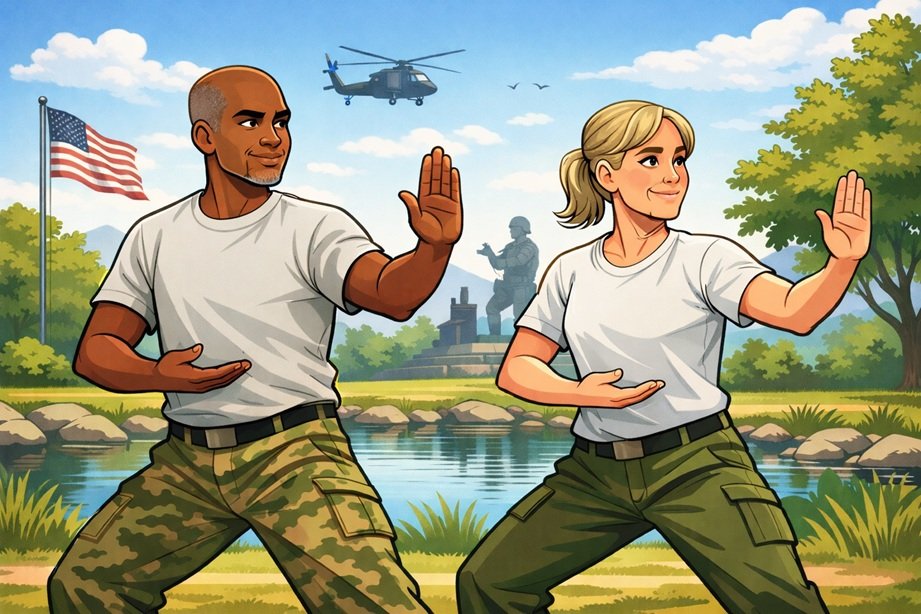
Tai Chi has several characteristics that make it particularly suitable for people dealing with chronic symptoms:
Low physical strain
Movements are slow, controlled, and adaptable to different ability levels.
Whole-body conditioning
The practice improves balance, coordination, flexibility, and leg strength.
Mind-body benefits
Breathing and mindful attention may support mood, stress reduction, and sleep.
Sustainable activity
Because it is gentle, many people find they can continue practicing even when other forms of exercise feel too demanding.
For veterans dealing with fatigue or pain, these factors may help make regular movement possible again.
A 12-Week Tai Chi Program: Physical Benefits for Veterans with GWI
In their study published by the journal Behavioral medicine in October 2025, the team from VA Boston Healthcare System followed 53 veterans with Gulf War Illness and chronic pain. Participants were randomly assigned to one of two groups:
- A Tai Chi program
- A wellness education program
Both programs lasted 12 weeks, with two 60-minute group sessions per week.
Researchers measured several aspects of physical functioning over time, including:
- Walking speed
- Lower-body strength
- Flexibility activity
- Overall physical activity levels
Both groups showed improvements in certain areas, but Tai Chi participants showed notable increases in time spent doing flexibility exercises—a key component of maintaining mobility and reducing stiffness.
While changes in walking speed were slightly greater in the wellness group, overall differences between the two programs were small. Importantly, the results suggest that gentle movement practices like Tai Chi can be a viable way for veterans with significant symptoms to stay active.
A Study about Tai Chi for Gulf War Veterans’ Mental Health
The same research team conducted a related study combining data from two randomized controlled trials involving 114 veterans with Gulf War Illness and chronic pain. This larger analysis, published by Journal of psychiatric research in February 2026, examined how Tai Chi might affect overall symptoms and mental health.
Researchers measured a wide range of outcomes, including:
- Overall health symptoms
- Pain interference with daily activities
- Fatigue
- Depression and anxiety
- Stress levels
- Sleep problems
- PTSD symptoms
- Mindfulness
- Physical and mental quality of life
Participants were assessed at the start of the program, immediately after the 12-week intervention, and again 3 months and 9 months later.
Both the Tai Chi groups and the wellness education groups showed improvements in several areas, including:
- Health symptoms
- Pain interference
- Depression and anxiety
- Mindfulness
- Quality of life
- PTSD symptoms
Remote Tai Chi Program – a Gamechanger for Veterans
One interesting finding was that how the program was delivered did not significantly affect results. Veterans who participated in in-person classes and those who joined remotely experienced similar outcomes. This means that Tai Chi programs may be able to reach many more veterans than traditional class formats allow.
For many veterans, attending a class in person is not always easy. Some live far from large VA medical centers or community programs that offer Tai Chi. Others face mobility challenges, chronic pain, fatigue, or transportation barriers that make regular travel difficult. Even when programs exist nearby, symptoms such as unpredictable fatigue or pain flare-ups can make committing to a fixed weekly schedule challenging.
Remote Tai Chi classes can help remove many of these obstacles.
With online sessions delivered through video platforms, veterans can practice from home, at their own comfort level. If symptoms are flaring up, they can participate sitting down or reduce the intensity of movements without feeling self-conscious. Being at home may also reduce stress for veterans who feel overwhelmed in unfamiliar environments or crowded spaces.
Another advantage is geographic reach. A single instructor can lead a class that includes veterans from multiple states or rural communities where in-person programs are limited or unavailable. This is particularly important because many veterans with chronic health conditions are older and may live in areas without specialized wellness programs.
Remote delivery can also help veterans build consistency in their practice. Instead of losing access to Tai Chi after a short in-person program ends, online classes allow participants to continue practicing regularly with the same instructor and group.
Of course, in-person classes still offer valuable benefits—especially the social connection and direct instructor feedback. But the research suggests that remote options can deliver meaningful therapeutic benefits as well, giving veterans more ways to participate.
For Tai Chi instructors working with veterans, this opens the door to hybrid approaches:
- in-person community classes
- live online sessions
- recorded practice sessions veterans can follow at home
By combining these formats, Tai Chi programs can become far more flexible and inclusive, making it easier for veterans to stay engaged with a practice that supports both physical and mental well-being.
Why Tai Chi Matters for Veterans with Chronic Conditions
Gulf War Illness tends to worsen over time, and there are still relatively few treatments that directly address the physical limitations veterans experience. That’s why even modest improvements in physical functioning are important.
More broadly, the symptoms studied in Gulf War Illness—fatigue, chronic pain, sleep problems, and cognitive difficulties—are challenges many veterans face, regardless of when or where they served.
Tai Chi may offer a practical way to stay active while respecting the body’s limits.
Practical Lessons for Tai Chi Practitioners
For veterans or instructors working with veterans, this research suggests a few practical takeaways:
1. Gentle movement counts.
Slow, controlled movement can still support physical health.
2. Flexibility is a key benefit.
Regular Tai Chi practice encourages mobility and joint comfort.
3. Pair Tai Chi with everyday activity.
Combining Tai Chi with simple goals like walking can help build overall fitness.
4. Keep practicing.
Some benefits declined by nine months, suggesting that ongoing practice is important.
For veterans dealing with chronic symptoms, Tai Chi isn’t about pushing harder—it’s about moving smarter. By combining gentle movement, breathing, and awareness, it offers a sustainable path back to regular physical activity and better long-term health.