
Migraines are more than just headaches – they disrupt work, mood, energy, and sometimes entire days. But there’s something powerful — and often overlooked — that can help reduce the intensity and frequency of migraines:
Gentle, consistent movement.
A large analysis of 27 clinical trials (1,611 participants) looked at how different types of exercise affect migraines. Instead of only asking whether exercise works, the researchers went deeper:
Which types of movement help the most?
And how much is enough to make a real difference?
Across all the evidence, two practices stood out:
👉 Tai Chi
👉 Yoga
Both are accessible, gentle, low-impact, and — most importantly — highly effective.
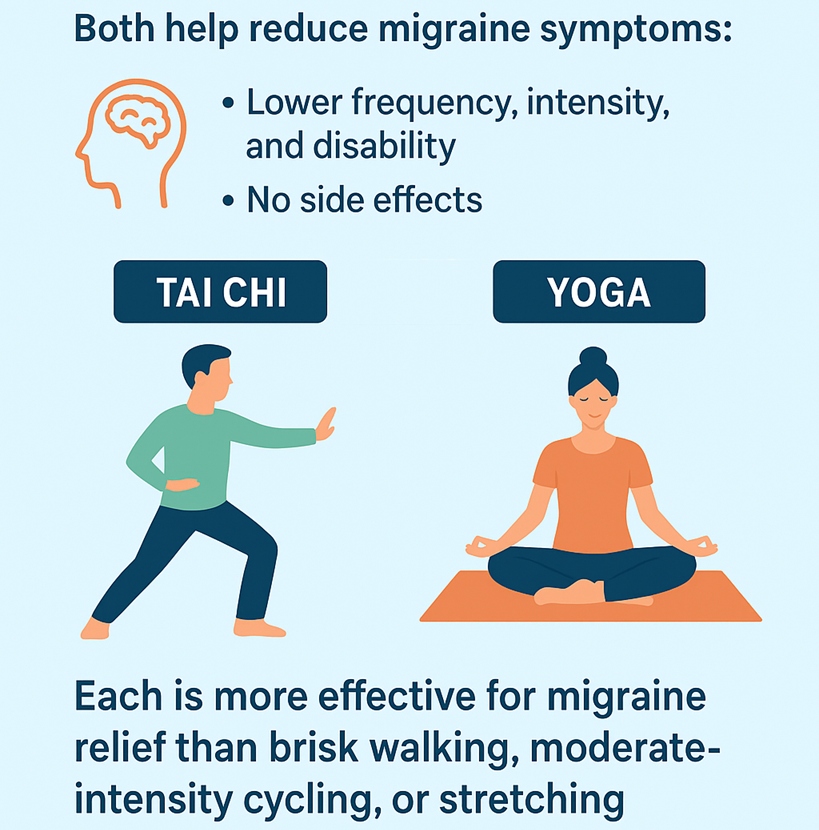
Why Tai Chi and Yoga Stand Out
The study found that mind-body practices like Tai Chi and yoga reduce migraine symptoms by:
- lowering the intensity of the pain
- reducing how often attacks occur
- decreasing migraine-related disability
- calming stress pathways in the brain
- improving sleep and emotional regulation
- relaxing neck and shoulder tension
Better yet, both practices had no notable side effects and showed high adherence — meaning people were able to stick with them over time.
Tai Chi for Migraine Relief
Tai Chi was tested in a full 12-week clinical trial — and the results were impressive:
- Migraine days decreased
- Pain levels went down
- Participants reported improved quality of life
- Tai Chi had the lowest dropout rate of all exercise interventions
- Benefits continued even after the program ended
Why Tai Chi works
Tai Chi supports the body in ways that directly matter for migraine:
- Smooth, slow movements ease tension in the neck and shoulders
- Deep breathing regulates the autonomic nervous system
- Upright posture and weight shifting promote circulation
- The calming, meditative pace reduces stress — one of the biggest migraine triggers
What a helpful Tai Chi practice looks like
You don’t need long sessions to see benefits.
The evidence supports:
- 15–20 minutes per session
- 3–5 times per week
- 8–10 weeks or more
- Gentle, moderate pace — no strain, no rushing
The key is consistency, not intensity.
Yoga for Migraine Relief
Yoga was studied even more extensively, with nine clinical trials showing:
- fewer migraine attacks
- lower pain levels
- reduced anxiety and stress
- better sleep
- improved neck and shoulder mobility
- better autonomic nervous system balance
Yoga was also effective as an add-on to medication or standard care, making it a strong companion to other migraine management strategies.
Why Yoga works
Migraine involves nervous system sensitivity — and yoga directly calms that system through:
- gentle movement
- deep, paced breathing
- postures that release upper-body tension
- relaxation practices (like Savasana or body scans)
- improved circulation and posture
What a Yoga helpful practice looks like
Most effective programs included:
- 20–30 minutes per session
- 3–4 times per week
- A combination of movement, stretching, breathwork, and relaxation
Again, consistency is what matters most.
How Tai Chi and Yoga Compare to Other Exercises
This is where the evidence gets interesting:
While many forms of exercise can help migraines, the study found that Tai Chi and yoga were more effective than:
- brisk walking
- moderate-intensity cycling
- stretching alone
- high-intensity interval training
Strength training was also effective — particularly when combined with other exercise — but Tai Chi and yoga clearly led the rankings when considering effectiveness, accessibility, and adherence.
In short:
Tai Chi and yoga offer some of the most reliable, gentle, and sustainable migraine relief among all exercise options studied.
Putting It into Practice
If you already do Tai Chi or yoga, you’re on the right path.
If you’re new to these practices, start small:
- 10–20 minutes at a time
- a few days a week
- gentle movements only
- focus on relaxing your breath and letting go of tension
These practices aren’t about pushing harder — they’re about calming the systems that migraines tend to overstimulate.
The Bottom Line
Tai Chi and yoga are not just “nice extras” — they are evidence-supported migraine relief tools that calm the body, center the mind, and ease pain over time.
With just 15–30 minutes a day, a few days a week, you can create meaningful change in how your body experiences migraines.
And best of all?
These practices are gentle, accessible, and something you can begin anytime — at home, without equipment, at your own pace.