💫 Not a yoga teacher?
This article is written for yoga instructors, but if you’re looking for how Tai Chi and/or Yoga can personally support your own menopause journey, you’ll love this version → Read the full guide for women
Menopause and Mood: What Every Yoga Teacher Should Know
Menopause is a natural life transition—but it can bring mood changes, sleep problems, and emotional instability.
A 2025 meta-analysis published in Frontiers in Psychiatry reviewed 16 randomized controlled trials and found that exercise, especially mind–body movement such as yoga and Tai Chi, significantly reduced depressive symptoms in menopausal women.
The researchers identified several factors that amplified results:
- Mind–body focus: Yoga and Tai Chi outperformed aerobic or resistance training.
- Longer sessions: 60–90 minutes offered stronger benefits.
- Extended programs: Interventions lasting more than 12 weeks were most effective.
- Individualization: Tailored or one-on-one instruction enhanced outcomes.
- Perimenopause sensitivity: Women in the transition stage responded most strongly.
Together, these findings show that structured, mindful, and consistent movement can meaningfully improve mood and quality of life during menopause.
How Tai Chi Complements Yoga

Yoga teachers already understand the power of breath, awareness, and mindful movement.
But this study highlights that Tai Chi—another mind–body discipline—produces equally strong antidepressant effects and enhances what yoga offers.
Shared Benefits
Both yoga and Tai Chi:
- Regulate the hypothalamic–pituitary–adrenal (HPA) axis, calming stress responses.
- Improve neurotransmitter balance, including serotonin, dopamine, and norepinephrine.
- Support better sleep and higher self-efficacy, improving emotional resilience.
Distinct Contributions
- Yoga emphasizes inner awareness and postural stillness.
- Tai Chi adds gentle, continuous motion that improves coordination, balance, and grounding—areas affected by hormonal shifts.
When Combined
The two create a full spectrum of movement and mindfulness:
- Yoga nurtures internal calm.
- Tai Chi carries that centeredness into flowing, embodied motion.
- Each reinforces the other’s physiological and emotional benefits identified in the research.
Why Yoga Teachers Should Learn Tai Chi
By adding Tai Chi, yoga teachers can get into a stronger position in meeting the needs of a growing demographic seeking natural mental health support.
Three key reasons to integrate Tai Chi into yoga teaching:
- Accessibility – Tai Chi’s standing, low-impact format suits women managing fatigue, stiffness, or joint sensitivity.
- Ideal Duration – According to the study, 60–90-minute sessions deliver the strongest results. Incorporating Tai Chi into your yoga classes adds variety to keep your students attentive and energized for the full session.
- Enhanced Emotional Regulation – Tai Chi’s rhythmic flow reinforces yoga’s breath-based calm, deepening stress relief and mood balance.
Applying the Findings in Your Classes
- Offer Yoga + Tai Chi for Menopause Support workshops or courses.
- Design programs that run 12 weeks or longer, following the evidence-based duration.
- Include personalized adjustments for energy level, balance, and mobility.
- Emphasize consistency and mindfulness over intensity—the key ingredients behind the study’s results.
For Yoga Teachers: A New Dimension to Your Teaching
If you’re a yoga teacher looking to expand your offerings, Tai Chi is a powerful complement to what you already teach. That’s why you should try our online Tai Chi training program — beginner-friendly, evidence-based, and fully aligned with the healing principles you already believe in.
🌀 Read our general article here to learn why teaching Tai Chi can be a great option for yoga teachers.
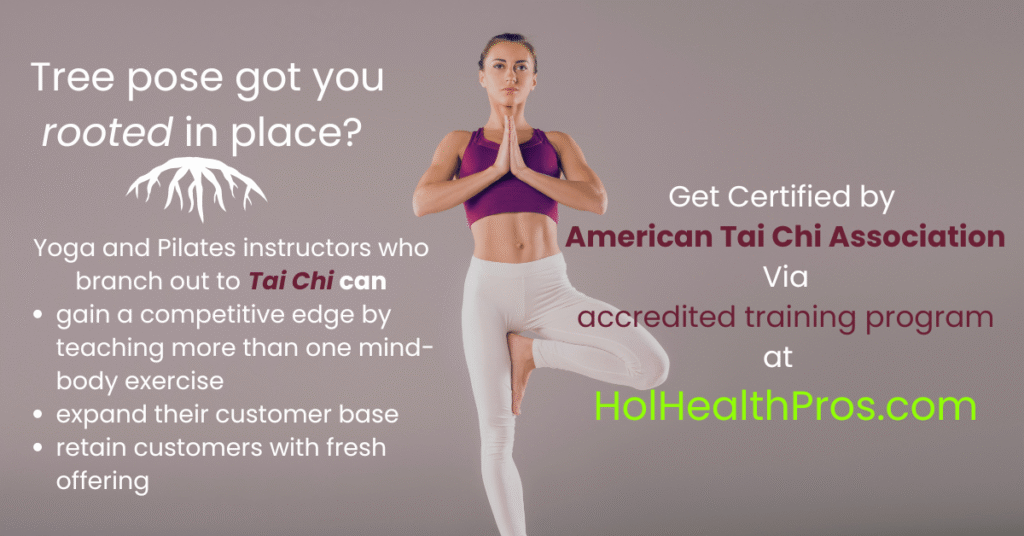
👉 Join our Tai Chi training and expand your impact: